February 24, 2009

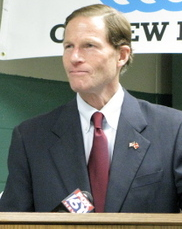
Blumenthal to intervene in JRC bankruptcy

Attorney General Richard Blumenthal, with a keen sense of justice, is promising to try to block a Journal Register Co. request to the bankruptcy court to pay 31 of its key executives $1.7 million in bonuses for continuing to lay off employees and close newspapers, according to the New Haven Independent.
Blumenthal told the online newspaper that the bonuses sought "seem unnecessary and excessive given the apparent financial failure of the company. It cerainly has the appearance of rewarding failure."
And, really, as a matter of public policy, wouldn't it make more sense to reward executives who find ways to keep newspapers -- or any other business -- open rather than shutting them down in the midst of the worst recession in decades? We desperately need both the jobs and the information that even JRC papers provide.
Go get 'em, Dick.

For more, see this.
And for a larger look at the newspaper situation in Connecticut, see this piece in Editor & Publisher.
*******
Copyright 2009. All rights reserved.
Contact Steve Collins at scollins@bristolpress.com

February 23, 2009

Senator's Dodd's Irish getaway

Image of Inishnee island on the isolated west coast of Ireland


If you haven't read Kevin Rennie's piece on U.S. Sen. Chris Dodd's Irish cottage, do. It's hard to imagine how it could all be on the strict up-and-up, though I'm open to more information.

Meantime, though, let's see what kind of place Inishnee island in Ireland is. From the looks of it, I can see why Dodd likes it. I know I wouldn't mind a few weeks there in the summer.

According to Wikipedia, "Inishnee (Gaelic: Inis NĂ­), is a small island off the shore of Ireland, in Roundstone Bay near the village of Roundstone in Connemara in County Galway. The island is equipped with a lighthouse. As of 2006, it had a population of 28." I don't think that counts Dodd.

But here is a picture of Dodd over there that recently ran in the Connemara View. Look just above the O'Dowd's Bar advertisement on the right.

These show the island's lighthouse:


Here's the view from another cottage on the island:


Here's one of the cottages on the island:


PS: Just to make it clear: I couldn't find a picture clearly identified as the cottage Dodd owns.
*******
Copyright 2009. All rights reserved.
Contact Steve Collins at scollins@bristolpress.com

Bristol eyes regionalization

Faced with tough budgetary choices, the city is eyeing the possibility of sharing equipment and perhaps services with neighboring towns.

Mayor Art Ward said he’s talked with the leaders of the towns surrounding Bristol – Wolcott, Plymouth, Burlington, Farmington, Plainville and Southington --- to get the ball rolling.

Ward said he hopes they can meet in March “to get some type of idea where we can help each other” and save money for taxpayers.

Gov. Jodi Rell has called for the state to offer financial incentives to push municipalities to try regional approaches wherever possible.

One area that’s bound to be on the agenda if area leaders meet is the possibility of sharing costly public works equipment, which no single town may need often but most have a use for sometimes.

Morris Laviero, a public works commissioner, said Bristol has a number of costly pieces of machinery sitting around so much that it’s hard to justify the expense of having them.

He said it is “a fantastic idea” to consider sharing with other towns so the financial burden is split and the equipment is used more often.

“There may be a way to use equipment that’s just sitting around,” Ward said.

Rell said in her budget address that her administration wants “ to help cities and towns through regionalism, a much discussed concept that must finally be put into action.”

“Municipalities can and should cut costs by sharing – sharing equipment, facilities, schools, personnel and more,” the governor said.

Her spending plan includes $40 million for new grants for infrastructure and equipment for municipalities “that want to join together to provide services like recycling, tax collection and payroll.”

There is also a $10 million fund proposed to assist regions to buy shared equipment such as plows, dump trucks and garbage trucks.

In addition, Rell said , two existing programs that pay for local projects and roads should be adjusted to provide 10 percent extra for towns that “join together on regionally beneficial programs.”

“It’s time regionalism was more than just something we talk about,” Rell said. “It’s time for it to be a reality.”


*******
Copyright 2009. All rights reserved.
Contact Steve Collins at scollins@bristolpress.com

February 21, 2009

Former Bristol Press owner files for bankruptcy

To nobody's surprise, the former owner of The Bristol Press -- a Yardley, Penn. company whose name I won't repeat again -- has filed for bankruptcy.
The company still owns several Connecticut papers, including The New Haven Register, The Register-Citizen in Torrington, The West Hartford News and the The Middletown Press, along with Connecticut magazine.
Personally, I hope the courts force it to sell all of its remaining properties under judicial supervision so that it can't simply close them as it has done to scores of historic newspapers in the past several months.
The Bristol Press would have been among those shuttered save for a federal law that forced it to disclose plans to close the paper, the fuss that we created to save the paper and the miraculous appearance of Michael Schroeder just after the holidays to step in and buy us. He's already proving that competent, caring management would have made all the difference all along.
One thing I am sure about is that the now bankrupt company that ran the Press into the ground for 15 years should be tossed on the ash heap of history. There's no point in restructuring it. Let the evil, awful enterprise die.
Its only purpose now is to serve as an object lesson for business students in how not to run a company.

Update at 10:15, Saturday night -- The bankruptcy papers make me want to throw up. They make it painfully clear that "31 key employees" with the former owner raked in tens of thousands of dollars for making significan reductions in headcounts. They didn't give a damn about the papers they closed, the communities served, or the workers they tossed out of jobs.
It's absolutely revolting. They had no incentive at all to sell the papers so, of course, almost none were sold. This ought to be a crime. See this PDF for details
I'll have much more to say after I have time to read through all of these filings carefully.
Oh, hell, I'm talking about the Journal Register Co. If I don't mention it, nobody will see what I write about it when they're searching Google for every tidbit.

See Reflections of a Newsosaur's writeup today, which shows the JRC has closed 163 newspapers since the end of 2007. If nothing else, the company will go down in history as the biggest newspaper killer ever.
Paul Bass in The New Haven Independent lays out the details of bonuses for laying people off, a practice that seems so outrageous it ought to be against the law.
*******
Copyright 2009. All rights reserved.
Contact Steve Collins at scollins@bristolpress.com

Bristol gun club up in arms over budget proposal

From left to right: Ralph Milano, Mickey Goldwasser, Roald Erling, and Bob Casar.  

Gov. Jodi Rell’s efforts to trim game stocking programs and raise fees for hunters have a local gun club up in arms.

Members of the Jacklin Rod and Gun Club – a private association that’s been around since 1913 – are urging state officials to back off from plans they fear would reduce or eliminate the various game stocking programs.

Gov. Jodi Rell’s proposed budget calls for special funds – including money that comes from licenses whose revenues pay for programs such as pheasant stocking – to be folded into the general fund.

While that doesn’t necessarily mean fewer dollars for game stocking programs, club members and other sporting groups across the state fear that politicians won’t put enough value on preserving the programs to keep them funded.

“How long will people buy licenses and pheasant tags if nothing is stocked? The money for the general fund will cease to exist. Taking that money is fraud!” Jacklin’s treasurer, Joel Wulff, wrote in a letter to the governor last week.

Wulff said he’s been a member of Jacklin since 1965 and has been a member of the Bristol Fish & Game Club even longer. Between the two clubs, which are across the street from each other, “at least 1,000 acres of land are held in a natural state to the benefit of all,” Wulff wrote.

“Recreation is a key to survival for every person,” Wulff said. “Reducing the funding for recreation cannot be seen as a good thing.”

In fact, he wrote, it would be stupid.

Jacklin “is on private land and receives no funds from the state. The club pays more taxes on its' land and collected dues than it does on actually stocking birds and fish. This is beyond a fair share and to further cut recreational activities, add additional regulations or raise fees for such related services just plan adds to the burden,” said Mickey Goldwasser, a member.

“Clubs like Jacklin are a national treasure,” said Bob Casar, another member.

“Membership spans generations and club members treat each other like family. We work hard to ensure we admit responsible stewards of the environment to the club and in so doing we protect green space for generations to come,” he said.

“Lastly we police our own membership to maintain compliance with federal, state and local laws and to ensure a safe experience for club members, guests, and neighboring landowners alike,” Casar said.

Wulff said another proposal, which would “place recreational shooting ranges under state police control and apply a noise standard for their continued existence,” is also a bad idea.

“Our club, among many in the state, has carried on the use of firearms on its premises for a long time, since 1913 in our case.  We are all obliged to be sure that any range is operated safely,” he said.

“This is an assault on the basic rights of citizens as established when we threw off the yoke of colonial status” back in 1776, Wulff said.

Wulff said he hopes “that our state will not pursue these disastrous actions in its attempts to meet the needs of the moment.”

“Connecticut, as the land of steady habits and the Constitution State, has a long and noble heritage,” he said. “It is the hallmark of any republican entity to meet the needs of its citizens in a straightforward manner. These items suggest a rob Peter to pay Paul style of governance.  It is not encouraging.”

What you can do

The governor’s budget is merely a starting point in the negotiations with the General Assembly. A final spending plan won’t be finished until June, if it’s done on time.

Legislators will have a say about what eventually finds its way into the state’s next two-year budget so if you want to influence their decision, let them know what you think.

You can find the names, email addresses and phone number of state senators and state representatives on the General Assembly’s website at cga.ct.gov.

Here's a copy of Wulff's letter to Gov. Jodi Rell:

Dear Governor Rell:

I have been involved in outdoor recreational sport activities for as long as I can remember.  Hunting, fishing, and hiking have all been part of my life and brought a great deal of benefit to me.  I fully understand that the current state of the economy is causing a crimp at all levels.  I applaud your efforts on behalf of the tax paying citizens of our fair state.  I am troubled by the cut backs that are proposed for the recreational activities listed earlier.  The backdoor move to regulate shooting activities is just, plain wrong.

The sportsmen and women of our state represent an important segment of the population.  These outdoor interests cross all lines of the population.  If they share one thing in common, it is a love and reverence for our natural heritage and the age-old pursuits of a free people.  These are people who support conservation and the environment at a real and personal level.  Through dues paying membership in rod and gun clubs across the state, they hold thousands of acres of land in a natural condition.  If the current focus on being “green” has any relevancy, these good folks are paying the dues to clubs in order to pay the taxes on the land they own.  The state does provide some help via the forestry classification for some of these lands, but the burden is still heavy.  Worse, the state extracts a 10% levy on the dues the clubs collect.  

As treasurer of this club, I have first hand experience with these costs.  Our annual expense for taxes, both property and dues, is budgeted at $14,550.00.  This is out of a total budget of $50,730.00.  We budget $9,600.00 for stocking birds and fish.  That should tell you something.  We hold about 130 acres including a 20+ acre pond.  Since we are a private club, we receive no funds from the state.  Taxation of the dues has always struck me as being fundamentally wrong.  Why should a citizen be taxed above and beyond income and sales taxes simply because of membership in an organization?  

That last speaks to a long standing gripe.  The proposals now being considered will reduce or eliminate the various game stocking programs across the state.  It sounds like the fees from sporting licenses that self fund sporting programs will also be side-tracked to the general fund.  How long will people buy licenses and pheasant tags if nothing is stocked? The money for the general fund will cease to exist.  Taking that money is fraud!  

Recreation is a key to survival for every person.  It comprises the things we do to enable us to do the things we must.  We must have a source of income and that means work.  Providing the necessities of life is always a struggle for the vast majority of the people.  Thoreau said it best, Most men lead lives of quiet desperation and go to the grave with the song still in them.”
Reducing the funding for recreation cannot be seen as a good thing. Redirecting the self funding revenue to the general fund, I already called it fraud. There is no stronger word except stupid! 
I wish I could stop here, but I can’t. Another proposed piece of legislation wants to place recreational shooting ranges under state police control and apply a noise standard for their continued existence. I expect this is “feel good” politics without thought to both sides of the issue. Our club, among many in the state, has carried on the use of firearms on its premises for a long time, since 1913 in our case.
We are all obliged to be sure that any range is operated safely. I expect this has eliminated ranges over the years as development encroached on down range safety. The bad side of this proposed change is to provide “due process” for an uncompensated taking of the rights guaranteed under the “takings clause” of the U. S. Constitution. This is an assault on the basic rights of citizens as established when we threw off the yoke of colonial status beginning on
July 4, 1776.  Law has typically “grandfathered” rights of this kind.  A fellow citizen moved into the area with the understanding that these activities were existent and would continue.  The proposed change strikes at the heart of what it means to be an American and must be resisted in the strongest ways. 

Beyond being a citizen, who am I to request your attention to these issues?  I will try to be brief.  I hold BS and MS degrees from CCSC/CCSU.  I have been a Republican for most of my life.  In 1948 I did favor Harry Truman because “I liked the way he talked.”  I was in kindergarten and beat all the pundits.  I have served on the Bristol Republican Town Committee from time to time.  I served as treasurer for Michael Werner in many of his campaigns for Councilman and Mayor of Bristol and also in runs for State Senator and Secretary of the State.  I also did treasurer duties for Alfred Morrocco in campaigns for Judge of Probate in Bristol.  I have been a JP for some years, although I have taken myself off the list recently.  I had the honor to serve as a commissioner on the Board of Water Commissioners for Bristol for 24 years, 23 as chairman.  During that time the Bristol Water Department continued cooperation with the DEP to enable upland game hunting, deer hunting, and use of Blue Trail segments that crossed the 4,000+ acres of our watershed.  

I have been a member of Jacklin since 1965 and a member even longer at the Bristol Fish & Game, which is literally across the street.  Between these two clubs at least 1,000 acres of land are held in a natural state to the benefit of all.  I have served Jacklin as secretary, director, and since 1980, as treasurer.  

It is my sincere hope that our state will not pursue these disastrous actions in its attempts to meet the needs of the moment.  Connecticut, as “the land of steady habits” and “the constitution state,” has a long and noble heritage.  It is the hallmark of any republican entity to meet the needs of its citizens in a straight forward manner.  These items suggest a rob Peter to pay Paul style of governance.  It is not encouraging. 

I thank you for your time given to reading my letter.  I hope you will find the way to meet the needs of what must be done without penalizing the many sportsmen and sportswomen in the state we all inhabit. 

Be well, 

J.      B. Wulff, Treasurer


*******
Copyright 2009. All rights reserved.
Contact Steve Collins at scollins@bristolpress.com

February 20, 2009

City to erase paper road to ease sale of school site land

 To ease the sale of Matthews Street property eyed for a new school, the city aims to erase an old right of way that has complicated the deal.

“Realistically, that section of the highway should be abandoned,” said Andre Dorval, the attorney hired by the city to handle the negotiations.

Sometime in the past, Clark Avenue cut across a portion of the 17-acre parcel sought for a new 900-student school, officials said, but the road shifted west and no longer requires the old right of way.

But as recently as 1976, the City Council indicated the .4-acre right of way could be needed for an intersection fix or, more improbably, a “mini-park.”

The city’s hearings and assessment committee this week agreed unanimously to give up all but a little sliver of the land – which may be used to straighten the junction of Clark and Matthews – and to recommend the council endorse the move in March.

At this point, it appears the city is close to making a deal to buy the property.

Dorval said negotiators are “relatively close” to settling on a fair price and that the differences that remain are “smaller scale.”

He said the city is “staying with the appraised value” in its talks with the property owner’s lawyer. It isn’t clear if the city might have to nudge up the price to complete a deal.

The city doesn’t yet own either of the sites it has proposed to build kindergarten to eighth grade schools on – the Matthews Street parcel and the former Crowley dealership on Pine Street.

School officials have said since November that the purchases have to be made quickly in order to give architects time to do their work before a state-imposed June 2010 deadline for beginning construction.

With every passing day, meeting that deadline looks less likely.But officials are pursuing the possibility of getting an extension to give them more time.

Dorval said that even if the deal falls through, it makes sense for the city to abandon the unneeded paper road.

He said, too, that if the school is built, straightening the intersection is going to be needed.

Dorval said that the angle there now would be tough for a bus to make at all. The construction period on a new school “would be the opportune time” to fix that junction, Dorval said.

The historic house at the corner would not be included in the deal. It would remain on about a 1.5 –acre lot, with the school erected downhill and to the east.

The city plans to buy another dozen acres to the east of the initial lot so that it would have more room for parking, ball fields and perhaps even future expansion of the building.

The city plans to build the two schools by 2015, with the state picking up 74 percent of the tab. It would close four older buildings.


*******
Copyright 2009. All rights reserved.
Contact Steve Collins at scollins@bristolpress.com

Public works budget aims for 2 percent hike

The city’s public works department is pushing for a 2 percent spending hike that would pump its annual budget to $13.1 million.

“I can almost assure you that it will come up lower,” Mayor Art Ward.

Two public works commissioners – city Councilor Mike Rimcoski and Morris Laviero – said they’d like to see deeper cuts that would do more to ease the burden on hard-pressed taxpayers.

“I’m a zero man,” Rimcoski said.

“Amen,” said city Councilor Craig Minor, who often clashes with Rimcoski over his refusal to shell out money for necessary government services and initiatives.

Ward said he tossed back the first public works spending plan because it came in a little over 2 percent.

“I couldn’t allow anything to go forward higher than that,” the mayor said.

But at least some officials said they are willing to go to bat to make sure public works gets the money it needs to operate effectively in caring for the city’s streets, municipal buildings, garbage and infrastructure.

“We’ll fight for the 2 percent,” city Councilor Kevin McCauley said.

McCauley said the city has “an aging fleet” of vehicles and some need replacement.

But Laviero said the city has a lot of costly equipment that it barely uses, including a $200,000 grader that’s broken down.

He said costly machines that are rarely used should be rented, not owned.

“That could be a big cut in the budget,” Laviero said.

Given the budget constraints and tight economy, he said, “We’re up against it. We can do without.”

Don Padlo, a longtime commissioner, said that whatever the merits of Laviero’s argument, the budget proposed for this year doesn’t ask for any equipment that isn’t needed immediately.

“We’ve got to have the fleet in decent shape,” Padlo said.

Public Works Director Walter Veselka said it would take $1.6 million annually to keep the fleet on a proper replacement schedule.

This budget has about $900,000 for new equipment.

Laviero said he is nervous about the economy, but sees it as a chance to improve efficiency and management.

“This is a great time to improve our department,” he said. “We just have to run a better ship.”

Veselka said the department is well-managed and that it is busy making improvements already.

“These times are forcing us to look at how we operate,” Ward said.


*******
Copyright 2009. All rights reserved.
Contact Steve Collins at scollins@bristolpress.com

Public works vehicles can be tracked

Many of the city's public works vehicles -- and all of its significant new ones -- are equipped with GPS units that allow constant tracking of their locations.
The department's director, Walter Veselka, said that he can see at any point where the trucks are and can even go back and check where they've been.
That means, for example, that managers can figure out which truck was in a given spot at a given time should someone have seen something that seemed untoward.
The big advantage of the devices, though, is that they allow the department to experiment a bit to see if there are more efficient solid waste routes or other changes that might make it easier and cheaper to do its work.
It would be interesting to find out if the GPS units would verify the commonly held notion that public works crews tend to congregate at certain donut shops near the beginning of each work day or if they linger over lunch or any of the other widespread notions that may have no basis in reality.
In any case, public works employees now know they're being watched from 22,000 miles up.
*******
Copyright 2009. All rights reserved.
Contact Steve Collins at scollins@bristolpress.com

February 19, 2009

Two commuter rail stations eyed for Bristol


The commuter rail plan under consideration in Hartford includes two new stations in Bristol.
State Rep. Frank Nicastro, a Bristol Democrat, said he has high hopes that lawmakers will back the $52 million plan to create a commuter rail service between Waterbury and Hartford that would run through Bristol and New Britain.
Mayor Art Ward said that restoring the service, which has been gone for decades, would help relieve congestion while adding new transportation options for residents.
A few legislators took a ride along the single track this week, including Nicastro and state Rep. Betty Boukus, a Plainville Democrat whose 22nd District encompasses portions of Bristol and New Britain.
Nicastro said that he heard from other lawmakers who were so excited about the possibility of taking the trip, too, that it’s possible a passenger car might be brought in sometime to allow a larger number to see the 24.5-mile route.
“We have a chance to bring mass transit back,” Nicastro said.
The Massachusetts-based Pan Am Railways has estimated it would cost $52 million to upgrade the track and add stations so that it could be used for passengers to move between Waterbury and Hartford.
It would be possible, officials said, for commuters to catch Metro North trains in Waterbury that would take them to New York City and beyond.
In Berlin and Hartford, commuters would have the ability to catch Amtrak trains as well.
Nicastro said that the three-hour delay on Interstate 84 the other day – when a suicidal gunman blocked traffic – showed how important it is to have other alternatives for people to get around.
He said that it shouldn’t be so easy for one person to make movement so difficult in the region.
Nicastro said that it doesn’t make sense for the state to pay more than $500 million to create a busway between New Britain and Hartford but refuse to pony up a fraction of that to restore commuter rail along an existing line of track.
He said it might be possible to use the spur between Torrington and Waterbury as well.
For now, the line isn’t used much.
There are four freight trains a day between Plainville and Berlin and one that runs between Bristol and Waterbury.
Bristol’s development officials have long urged the creation of a downtown passenger rail station, perhaps also serving as a central bus station, too. They said that a transportation center would help bring people back to the city center.
One station is tentatively slated for downtown. The other would be in Forestville.
A detailed study of the commuter rail proposal is the next step, officials have said. That may happen during this legislative session, particularly if officials are convinced that the idea has merit and could be done relatively quickly.
Nicastro and Ward said they would like to see trains carrying people through town again within a few years.

*******
Copyright 2009. All rights reserved.
Contact Steve Collins at scollins@bristolpress.com

Library project comes in $303K under budget

The city closed the books this month on the $12 million expansion of the Main Library and determined that it not only got done on schedule, it also came in $303,000 under budget.

“I’ve never seen that before,” said city Councilor Frank Nicastro, liaison to the library. “What a great job they did.”

Longtime Library Director Francine Petosa said the expansion, which doubled the library’s space and vastly increased its parking, has proven a hit for the community and “a highlight of my career” as well.

“The community embraced this project and continues to do so,” Petosa said.

Finance Chairman Rich Miecznikowski said he’s heard “nothing but good comments” about the work.

The result is “a beautiful, beautiful facility,” Mayor Art Ward said. “It is definitely a part of the community. It is definitely being used.”

He called it “a tremendous project” and commended all of the officials involved in it.

City Comptroller Glenn Klocko said the excess money for the project is pumped back into supporting the debt service on the bonds that were sold to pay for the expansion.

The city cut an $8.5 million deal in 2004 with W.J. Mountford Co. of South Windsor to carry out the bulk of the construction work, which was largely finished within a couple of years.

Since then, the city has been tying up loose ends on the project, a process that is typical of large construction jobs.

In addition to the construction costs, the city spent about $3.5 million on architects, overseers and other project expenses, including property acquisition.

Petosa said she’s happy that it all came together so well.

“Our expectations have been exceeded in so many ways,” Petosa said.


*******
Copyright 2009. All rights reserved.
Contact Steve Collins at scollins@bristolpress.com

New online directory of city services

Someone industrious at City Hall has prepared a useful directory of city services for Bristol's website. Check it out.

*******
Copyright 2009. All rights reserved.
Contact Steve Collins at scollins@bristolpress.com

New York Times: Beer on Sundays

An editorial in the New York Times says it's time for Sunday beer sale in Connecticut, a move that might bring in more tax revenue for the state but is opposed by state Sen. Tom Colapietro, a Bristol Democrat, who is co-chair of the legislative panel that oversees the issue.
“We will not be able to drink our way out of this problem,” Colapietro told the paper.
It's amazing to me to see how much interest there is in this tiny sideshow of an issue this year. With an $8 billion budget gap to worry about, journalists, the public and politicians are arguing about whether to drop the law that closes off alcohol sales on Sunday? The money at stake is not even a drop in the mug given the magnitude of the state's fiscal problems.

*******
Copyright 2009. All rights reserved.
Contact Steve Collins at scollins@bristolpress.com